8 August 2026 • Aliran Tenaga Engineering Team
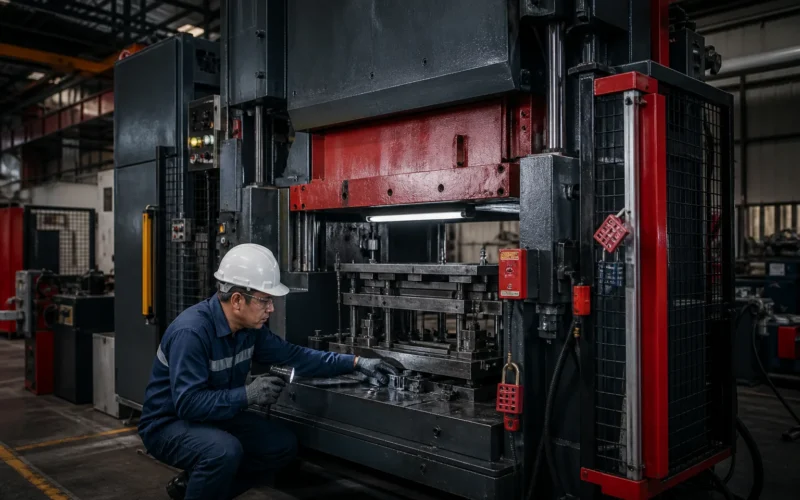
A power press is one of the hardest-working machines in any metalworking or manufacturing plant — and one of the least forgiving when it is neglected. When a press goes down unexpectedly, it does not just stop one machine. It stops the whole line that feeds off it, leaves operators standing idle, and puts your delivery dates at risk. Worse, a poorly maintained press is a genuine safety hazard for the people who run it.
The good news is that most press breakdowns are predictable and preventable. A press rarely fails without warning; it usually gives you weeks of small signs first. A simple, disciplined maintenance routine catches those signs early, keeps the machine safe, and stretches its working life by years. This checklist walks you through what to check and how often, in plain language, so your team can build maintenance into the daily rhythm of the factory rather than waiting for something to break.
It is easy to see maintenance as a cost. In reality it is one of the best returns you can get on a machine. A single unplanned breakdown on a busy press can cost you far more in lost production, rushed repairs and missed orders than a whole year of routine servicing. The maths is not close.
Beyond the money, there is safety. A press applies enormous force, and the systems that keep operators safe — the clutch, the brake, the guards and the controls — are exactly the parts that wear. Maintenance is not just about keeping the machine running; it is about making sure it stops when it is supposed to. A press that is looked after runs faster, holds tolerance better, produces fewer rejects, and keeps your people safe. That is why the plants with the least downtime are almost always the ones with the most boring, consistent maintenance habits.
These take only a few minutes but catch the majority of problems before they grow. Make them part of the shift start-up, done by the operator every day:
Give your operators a simple printed card or a short digital form for this. The point is not paperwork — it is that the same five minutes happen every single shift, so a small problem is spotted on Tuesday instead of becoming a breakdown on Friday.
These go a level deeper and are usually done by a maintenance technician rather than the operator:
Keeping a simple log of these checks builds a history you can use. Over a few months you start to see patterns — which parts wear fastest, how long a set of brake linings really lasts on your workload — and that lets you order parts before you need them instead of scrambling when something fails.
Once a year, or according to the manufacturer’s schedule, the press deserves a thorough overhaul by someone who knows the machine well:
This annual service is also the natural moment to catch bigger wear before it becomes a failure — a bearing that is starting to go, a slide clearance drifting out of tolerance. Fixing those on a planned shutdown is far cheaper and calmer than doing it after a sudden breakdown in the middle of a production run.
It is worth saying plainly: on a power press, the safety systems are not optional and must never be bypassed to keep production going. The clutch and brake must stop the slide reliably every single cycle. The guards, light curtains and two-hand controls must be in place and working. The emergency stops must respond instantly. If any of these is faulty, the machine should be stopped until it is fixed — no exceptions.
A press that skips a beat on its braking or has a bypassed guard is not a productivity problem; it is a serious injury waiting to happen. The few minutes of downtime to fix a safety device are nothing next to the cost, human and financial, of an accident. Any pressure from the floor to “just run it for now” should be met with a firm no, and a fast repair.
When something does need replacing, use genuine parts and technicians who know presses. A cheap non-genuine clutch plate or brake lining may fit, but if it wears faster or performs differently, it can cost you far more in downtime and risk than it saved. The same goes for who does the work — a press is a specialist machine, and proper servicing keeps both its performance and its safety systems reliable.
The best arrangement for most factories is a planned maintenance contract with a specialist who keeps records of your machine, stocks the common wear parts, and can respond quickly when you need them. That way maintenance happens on a schedule instead of in a panic, and you always know the state of the machine.
It is also worth investing a little time in your operators. The people who run the press every shift are your first line of defence, and a short session teaching them what a healthy press sounds and feels like — and which noises, smells or vibrations to report straight away — catches problems days before they would otherwise surface. Combine that with a simple logbook at the machine where each shift notes what they checked and anything unusual, and you build a running history that tells you exactly how the press is ageing. That history is what lets you plan overhauls and order parts calmly, on your terms, instead of reacting to a breakdown.
How often does a power press need professional servicing?
Daily and weekly checks can be done in-house, but a full professional service is usually recommended once a year, or more often for presses that run heavy, continuous shifts.
What is the most common cause of press breakdowns?
Poor or missed lubrication and worn clutch and brake components are among the most common, and both are easily caught by routine checks before they cause a failure.
Can you service a press from any manufacturer?
Yes. Experienced press technicians service and supply parts for presses from a wide range of makers, not only one brand.
Is it worth a maintenance contract instead of calling only when it breaks?
For most factories, yes. Planned maintenance costs far less than the downtime and rushed repairs of a breakdown, and it keeps the safety systems reliable.
How long should a well-maintained press last?
With disciplined maintenance and timely overhauls, a quality press can run reliably for decades — neglect is what shortens its life, not age.
At Aliran Tenaga Technology, we design, build, install and maintain industrial systems across Malaysia — all under one roof from our base in Subang Jaya, Selangor. With over 15 years of hands-on engineering, an in-house design and fabrication team, and rapid on-site support, we are one accountable partner from first idea to running line. Tell us what you need and our team replies within 24 hours