11 August 2026 • Aliran Tenaga Engineering Team
Electrical wiring is the nervous system of a factory. When it is done well, you never think about it — machines start, lines run, and the power is just there. When it is done badly, it becomes the source of the most frustrating and dangerous problems a plant can have: random shutdowns nobody can explain, machines that trip for no clear reason, overheating panels, and in the worst cases, fire and injury.
The trouble is that bad wiring often looks fine. A panel can pass a quick glance and still be a mess of overloaded circuits, undersized cables and unlabelled wires behind the door. This article explains why industrial wiring is a specialist job, what a well-built control panel gives you, the common problems that quietly cost factories money, and what to look for in an electrical partner.
Industrial electrical work is a different world from wiring a house or an office. Factories run high loads, big motors, and equipment that switches on and off constantly, creating electrical stresses that ordinary wiring is not built to handle. The environment is harsher too — heat, dust, vibration, moisture and oil all attack wiring and connections over time.
On top of that, a factory’s electrical system has to tie together machines, controls, sensors and safety systems so they all work as one. Getting that right takes someone who understands industrial loads, control systems and the relevant standards — not a general electrician doing their best with unfamiliar equipment. The cost of getting it wrong is not a flickering light; it is an unplanned shutdown, a damaged machine, or a serious safety incident. That is why serious factories treat their electrical work as an engineering task, not a quick fix.
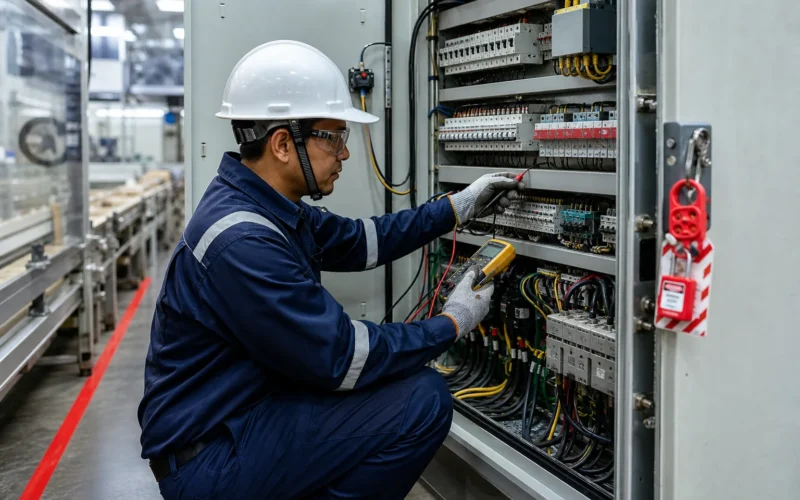
The control panel is the heart of a machine’s or a line’s electrical system — the enclosure that houses the breakers, contactors, drives, controllers and wiring that make everything run. A well-built panel is a genuine asset, and the difference between a good one and a bad one shows up every day of the machine’s life.
A properly designed panel gives you several things at once. It is safe, with correctly rated protection so a fault trips cleanly instead of causing damage or danger. It is reliable, because quality components and neat, correctly sized wiring do not overheat or work loose. It is easy to maintain, with clear labelling and logical layout so a technician can diagnose a fault in minutes instead of hours. And it is ready to grow, with a little spare capacity so you can add a machine or a feature later without rebuilding everything.
That last point matters more than people expect. A panel built with no room to spare forces an expensive rebuild the first time you expand. A panel built with a bit of headroom lets your operation grow smoothly. When you compare the cost of a cheap panel against a well-built one, the well-built panel almost always wins over the life of the machine — in downtime avoided, faults diagnosed faster, and expansions made easy.
Most electrical problems in factories come down to a handful of recurring issues. Recognising them helps you understand why an unexplained fault keeps coming back:
The real cost of these problems is rarely the repair itself. It is the downtime while someone hunts for the fault, the production lost while the line is stopped, the energy quietly wasted through undersized cable and bad connections, and the risk to people and property if a fault is left long enough. A single unexplained shutdown on a busy day can cost more than it would have taken to wire the panel properly in the first place.
In an industrial setting, electrical safety is not a box-ticking exercise — it protects your people, your equipment and your building. Proper earthing, correctly rated protective devices, safe isolation points, and compliance with the relevant standards are what stand between a normal working day and a serious incident.
There is a business case too. Electrical work that meets the required standards protects you in the event of an inspection, an insurance claim or an incident investigation. Cutting corners to save a little on the installation can cost you enormously if a fault causes damage and the wiring is found to be non-compliant. A good electrical partner builds to standard as a matter of course, documents the work, and can show you that what they installed meets the requirements — which is exactly what you want on record.
It is also worth scheduling a periodic electrical inspection rather than waiting for a problem to force one. Just as you service machines on a plan, having a qualified person check your panels and wiring at sensible intervals catches loose connections, heat damage and overloaded circuits before they cause a shutdown or a fire. A thermal scan of a busy panel, for example, quickly reveals hot spots that the eye would never see, letting you fix a failing connection during planned downtime instead of after it fails on a production day.
Good electrical work is also the foundation for anything more advanced you want to do. The moment you want to automate — add a PLC to control a line, fit sensors, link machines together, add variable speed drives, or bring in a robot — it all rests on a clean, well-designed electrical system underneath.
Trying to bolt automation onto messy, undersized or undocumented wiring is slow, unreliable and frustrating. Get the wiring and control panels right first, and automation becomes far easier to add and far more dependable once it is running. This is why it pays to work with an electrical partner who also understands controls and automation — they build the system today with tomorrow’s upgrades in mind, so you are not tearing things out the first time you want to modernise a line.
Choosing who does your industrial electrical work is as important as the work itself. Look for a partner with genuine industrial experience, not just general electrical work — someone who understands factory loads, motors, controls and safety systems. They should build to the relevant standards and be able to show it, use quality components rather than the cheapest available, and label and document their work so your team can maintain it easily.
Ideally they also handle control panel design and build in-house and understand automation, so your system is ready to grow. And when something does go wrong, you want a partner who can respond quickly, because electrical faults tend to stop production until they are fixed. One accountable team that designs, builds, installs and services your electrical systems is worth far more than the lowest quote from someone you will struggle to reach when a line is down.
Can a general electrician do industrial factory wiring?
Industrial wiring involves high loads, motors, controls and safety systems that need specialist knowledge. A general electrician may not be equipped for it, and mistakes can be costly or dangerous, so industrial experience matters.
How do I know if my existing wiring is unsafe?
Warning signs include frequent unexplained trips, panels or cables that run hot, a burning smell, unlabelled or messy wiring, and lots of patched-in additions. An electrical inspection will tell you clearly.
What makes a good control panel?
Correctly rated protection, quality components, neat and properly sized wiring, clear labelling, a logical layout and a little spare capacity for future growth.
Is upgrading old wiring worth the cost?
Usually yes. The cost of an upgrade is small next to the downtime, wasted energy and safety risk of leaving overloaded or degraded wiring in place, and it is the foundation for any automation you add later.
Do you also handle automation and controls?
Yes. Electrical, control panel and automation work are closely linked, and having one team handle all of it means the system is designed to work together and to grow.
At Aliran Tenaga Technology, we design, build, install and maintain industrial systems across Malaysia — all under one roof from our base in Subang Jaya, Selangor. With over 15 years of hands-on engineering, an in-house design and fabrication team, and rapid on-site support, we are one accountable partner from first idea to running line. Tell us what you need and our team replies within 24 hours with a clear, no-obligation quote.
👉 See how we can help or Request a Free Quote today.
Related reading: