Material HandlingRoller Conveyor vs Free Flow Chain Conveyor: Which System Does Your Factory Need?
By Aliran Tenaga Technology
·
April 2025
·
8 min read

If you are setting up or upgrading a production line in Malaysia, one of the first decisions you will face is choosing the right conveyor system. Two of the most common options are the roller conveyor and the free flow chain conveyor. Both move products efficiently, but they work very differently and excel in different environments.
In this guide, we break down exactly how each system works, what it is best suited for, and how to choose the right one for your factory floor.
What is a Roller Conveyor?
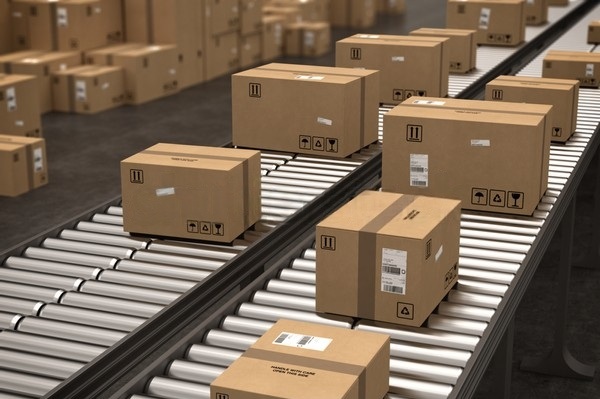
A roller conveyor is one of the most widely used material handling systems in Malaysian manufacturing. It consists of a series of cylindrical rollers mounted in a fixed frame. Products are placed on top of the rollers and either move by gravity (on an incline) or are driven by a motor connected to the rollers via a belt or chain drive.
Types of Roller Conveyors
- Gravity roller conveyors — Products roll freely downhill. Simple, low cost, no motor required. Used for unloading and sorting.
- Powered roller conveyors — Driven by a motor, they move products horizontally or slightly inclined. Highly controllable with variable speed drives.
- Belt-driven roller conveyors — A flat belt runs beneath the rollers, driving them at a consistent speed. Ideal for fragile or irregularly shaped products.
Key Advantages of Roller Conveyors
- Low maintenance — rollers can be replaced individually
- Suitable for heavy loads including metal parts, automotive components, and pallets
- Simple design, easy to extend or modify
- Available in stainless steel for food and pharmaceutical applications
- Lower upfront cost compared to chain-based systems
What is a Free Flow Chain Conveyor?
A free flow chain conveyor (also called an accumulation or pallet conveyor) works on a fundamentally different principle. Rather than moving products directly on rollers, it uses a chain-driven carrier or pallet system. The chain runs continuously underneath, but individual pallets or carriers can stop and accumulate at workstations without stopping the entire line.
This is achieved through a friction-based clutch or pneumatic stop mechanism at each station. When a carrier reaches a stop, it sits still while the chain continues to run beneath it. Once released, it picks up speed and moves to the next station.
Key Advantages of Free Flow Chain Conveyors
- Allows products to accumulate and pause without stopping the whole line
- Ideal for multi-station assembly processes
- Each workstation operates independently — improving efficiency
- Highly flexible routing — can include turns, lifts, and merges
- Supports manual and automated workstations on the same line
Head-to-Head Comparison
| Feature | Roller Conveyor | Free Flow Chain Conveyor |
|---|
| Movement Type | Continuous flow | Accumulation / stop-and-go |
| Best For | Goods in transit, sorting, warehousing | Assembly lines, multi-station processes |
| Load Type | Flat-bottomed products, pallets, boxes | Pallets and carriers (dedicated fixtures) |
| Product Accumulation | Limited (with special rollers) | Excellent — by design |
| Routing Flexibility | Moderate | High (curves, lifts, merges) |
| Maintenance | Low — simple roller replacement | Moderate — chain and clutch servicing |
| Initial Cost | Lower | Higher |
| Typical Applications | Warehousing, distribution, food processing | Automotive, electronics, heavy assembly |
Which Industries Use Each System in Malaysia?
Roller Conveyors Are Common In:
- Food and beverage manufacturing — moving bottles, cans, and packaged goods along production lines
- E-commerce and logistics warehouses — sorting and transporting parcels
- Rubber and plastics manufacturing — moving moulded parts between stations
- Pharmaceutical production — stainless steel rollers for hygienic environments
Free Flow Chain Conveyors Are Common In:
- Automotive assembly plants — building vehicles across multiple workstations
- Electronics assembly — PCB assembly and testing requiring precise dwell time at each station
- Heavy equipment manufacturing — assembling large machines that require multiple workers at each stage
- Appliance manufacturing — washing machines, air conditioners, and refrigerators
Aliran Tenaga Tip
Many Malaysian factories benefit from a hybrid approach — roller conveyors for transport and transfer between departments, with free flow chain conveyors at the core assembly line. Our engineers can design a system that combines both for maximum efficiency.
How to Choose the Right System for Your Factory
Ask yourself these questions before making a decision:
- Do your products need to stop at specific stations? If yes, free flow chain is the better choice.
- Is continuous throughput more important than individual station control? If yes, roller conveyors are more suitable.
- What is the weight and shape of your products? Heavier or irregular products may need roller conveyors. Palleted assemblies suit chain systems.
- What is your budget? Roller conveyors have lower capital costs. Free flow chain systems have higher upfront investment but often greater long-term productivity gains.
- How complex is your routing? If you need turns, vertical transfers, or branching lines, free flow chain systems are more versatile.
Choose Roller Conveyor If You Need
- Simple point-A-to-point-B transport
- Lower initial investment
- Heavy or large flat-bottomed loads
- Gravity-assisted movement on slopes
- Easy future expansion or reconfiguration
Choose Free Flow Chain If You Need
- Multiple workstations with dwell time
- Independent carrier accumulation
- Mix of manual and automated processes
- Complex routing with turns and lifts
- High-volume assembly line efficiency
Custom Conveyor Solutions by Aliran Tenaga Technology
At Aliran Tenaga Teknologi Sdn. Bhd., we design, fabricate, install and commission both roller conveyor and free flow chain conveyor systems for Malaysian manufacturers. Every system is custom-engineered to your factory layout, production speed, product specifications, and budget.
Our material handling solutions include:
- Roller conveyors — powered and gravity-fed
- Free flow chain conveyors for assembly lines
- Palletized conveyor systems
- Pallet goods lifters
- Custom conveyor accessories and integration
We serve manufacturers across Selangor, Kuala Lumpur, Penang, Johor, and throughout Malaysia. With over 15 years of experience and 200+ completed projects, we have the expertise to recommend and deliver the right system for your operation.
Frequently Asked Questions
What is the main difference between a roller conveyor and a free flow chain conveyor?
A roller conveyor uses cylindrical rollers to move products along a straight or inclined path and is best for heavier, flat-bottomed loads. A free flow chain conveyor uses a chain-driven carrier system that allows pallets or carriers to accumulate and stop independently, making it ideal for assembly lines where products need to pause at workstations.
Which conveyor system is better for an automotive assembly line in Malaysia?
For automotive assembly lines, a free flow chain conveyor is typically better because it allows individual carriers to accumulate at each workstation without stopping the entire line, improving efficiency and allowing operators to work at their own pace.
How much does a conveyor system cost in Malaysia?
Conveyor system costs in Malaysia vary widely based on length, load capacity, and complexity. Roller conveyors typically start from RM 8,000 to RM 50,000+ for a complete system. Free flow chain conveyors are generally more expensive due to their complexity, starting from RM 20,000 upwards. Contact Aliran Tenaga for a tailored quotation.
Can I customise a conveyor system for my specific factory layout?
Yes. Aliran Tenaga Teknologi specialises in custom conveyor design tailored to your factory floor layout, product type, production speed, and load requirements. We handle design, fabrication, installation and commissioning.
How long does it take to install a conveyor system?
Installation time depends on the system size and complexity. A basic roller conveyor line can be installed within 1 to 3 days, while a full free flow chain assembly line may take 1 to 3 weeks including testing and commissioning.
Need a Conveyor System for Your Factory?
Our engineers will assess your requirements and recommend the right solution. No obligation.
Get a Free Consultation →